Newsletter!

Get timely updates from your favorite products

You have been successfully Subscribed! Ops! Something went wrong, please try again.
Edit Template

Search for Products:

Explore, Discover, and Find Your Favorite Greek Flavors

We respect your privacy, your searches are secure.

Edit Template

Search for Products:

Ut elit tellus, luctus nec ullamcorper mattis, pulvinar dapibus leo.

We respect your privacy, your searches are secure.

Edit Template

    No Products in the Wishlist

About Ouzo

Ouzo — The Spirit of Greece

Ouzo is Greece’s most iconic anise-flavored spirit, deeply woven into the country’s culture, history, and way of life. More than just a drink, ouzo embodies the essence of Greek hospitality and the Mediterranean spirit of togetherness.

What Is Ouzo?
Ouzo is a traditional Greek distilled spirit made primarily from high-quality grape-based alcohol, flavored predominantly with anise seeds — giving it its characteristic sweet, aromatic licorice taste. Alongside anise, distillers often add other botanicals such as fennel, mastiha, coriander, cardamom, cloves, or cinnamon, creating unique, closely guarded recipes that vary by region and producer.

How Is Ouzo Made?
The production of ouzo begins with a neutral grape spirit, usually from the distillation of grape marc or must. This spirit is then redistilled in traditional copper stills along with carefully selected anise seeds and aromatic herbs. The slow distillation process extracts essential oils, especially anethole from the anise, which gives ouzo its distinctive flavor and aroma.
The distillate is then diluted with pure water to reach the desired alcohol content — typically between 37.5% and 40% ABV. The final spirit rests for a period to allow flavors to harmonize before bottling.

Bottling and Labeling
Ouzo is bottled under strict regulations in Greece, with the designation “Ouzo” protected by European law as a PDO (Protected Designation of Origin) product. Bottles often range from traditional glass containers with classic labels to premium editions with artisanal packaging for export and gifting.

How to Enjoy Ouzo
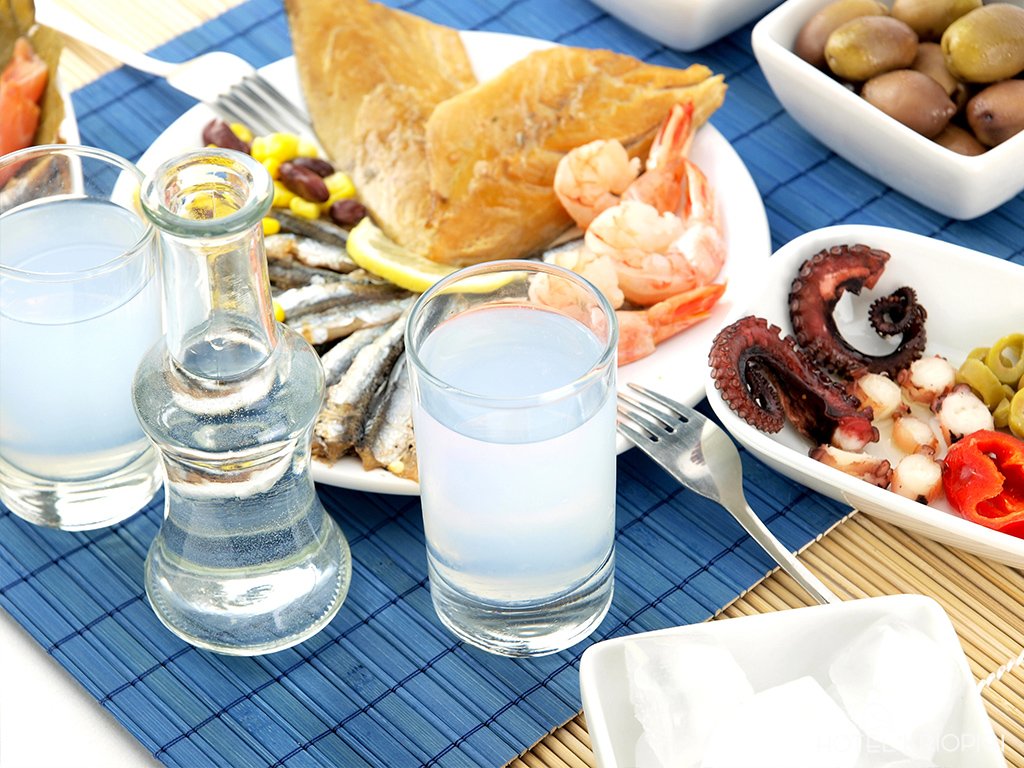
Ouzo is traditionally served neat or mixed with cold water, which turns it a distinctive milky white — a natural reaction called “louching.” It’s commonly served over ice, especially in warm weather, and always accompanied by a selection of small dishes known as meze — such as seafood, olives, cheeses, or grilled vegetables.

Whether sipped slowly by the sea, shared in a lively taverna, or offered at a family gathering, ouzo is a drink of conversation, friendship, and celebration. It’s not just a spirit — it’s a ritual, a taste of Greece in every glass.

Ouzo — A Story Distilled in the Heart of Greece

On a sunlit terrace by the Aegean, laughter rises over clinking glasses. The table is set, the sea hums softly in the background — and at its center stands a slender glass, swirling with milky white mystery. This is ouzo. More than a drink. A ritual. A whisper of Greek summers and endless conversations.

Born in the 19th century, in the heart of Greek distilleries, ouzo carries with it the legacy of ancient flavors and the craftsmanship of patient hands. Its soul comes from grapes — the humble fruit of the sun-drenched vineyards — distilled gently in copper stills, where they meet the bold aroma of anise seeds. But ouzo is not in a hurry. The slow distillation invites secrets from fennel, mastiha, and wild herbs — each master distiller guarding their own family recipe like a cherished heirloom.

Bottled with care, labeled with pride, ouzo leaves the distillery as more than a product. It leaves as a passport to Greek culture. Whether in a simple glass bottle sold in a village shop or a finely crafted edition crossing borders, ouzo carries the unmistakable signature of its homeland.

And how do you drink it?
Not in haste. Never alone.
Ouzo is poured gently, neat or with a splash of cool water — watching as it clouds, like a soft veil of white. A few ice cubes, perhaps. Always with meze — octopus grilled to perfection, olives shining in the sun, a wedge of feta crumbling under the fork.
It’s a drink that opens hearts, invites stories, stretches afternoons into golden evenings.

Ouzo is Greece in a glass. The spirit of shared moments, of friendship and freedom.
Not merely consumed — but lived.

Ouzo — The Liquid Legacy of Greece

In the narrow alleys of Plomari, on the island of Lesvos, copper stills have whispered their fragrant secrets for centuries. It was here, in the heart of the Aegean, that ouzo found its spiritual home — a drink born of the Greek land, sea, and soul.

Though its official history begins in the 19th century, ouzo’s roots stretch far deeper. It carries the ancient echoes of tsipouro, the monks’ fiery distillate from the 14th century, and the timeless love of Greeks for anise-flavored spirits — flavors that traveled with merchants and sailors across the Mediterranean. But it was ouzo that became the nation’s signature, defined by its distinctive taste and protected by European law as a uniquely Greek treasure.

Distilled with care, ouzo starts with the sun-soaked grapes of the Greek countryside. These are transformed into a pure spirit and then slowly infused with anise — the aromatic seed that has flavored Greek life for millennia. Some distillers add whispers of fennel, mastiha from Chios, or rare island herbs, crafting blends as unique as the hands that make them. The copper stills hum softly, the distillers watch with inherited patience, and the essence of Greece is captured — clear, bright, unmistakable.

But ouzo is more than craft. It’s custom.
It’s poured at every feast, clinked in every yiamas toast, shared at sunlit tables from Athens to the smallest island harbor. Greeks drink it slowly, never rushed — a companion to salty meze, good company, and endless conversations. Add a splash of water, watch it bloom into a cloudy swirl — the famed “ouzo effect,” a quiet spectacle of chemistry and culture.

Ouzo binds generations. It tells the story of villages, of sea voyages, of political salons and family Sundays. From the tavernas of Piraeus to the courtyards of Mykonos, it is a silent witness to love affairs, business deals, and summer romances.

Not just a drink —
A symbol.
A ritual.
A sip of living Greek history.

Previous Post
8 Tips on Roasting Spices
Next Post
Greek Olives a Land

Leave a Reply

Your email address will not be published. Required fields are marked *


You may also like...

  • All Posts
  • Articles
  • Recipes
  • Uncategorized
  • Uncategorized
  • Uncategorized
  • Uncategorized
  • Uncategorized

Best Selling Products

Naturally made, full of character, and ready to elevate your kitchen with real, honest taste.


Copyright © 2025 / All Rights Reserved / Design & Writing by Savodor Group Team